
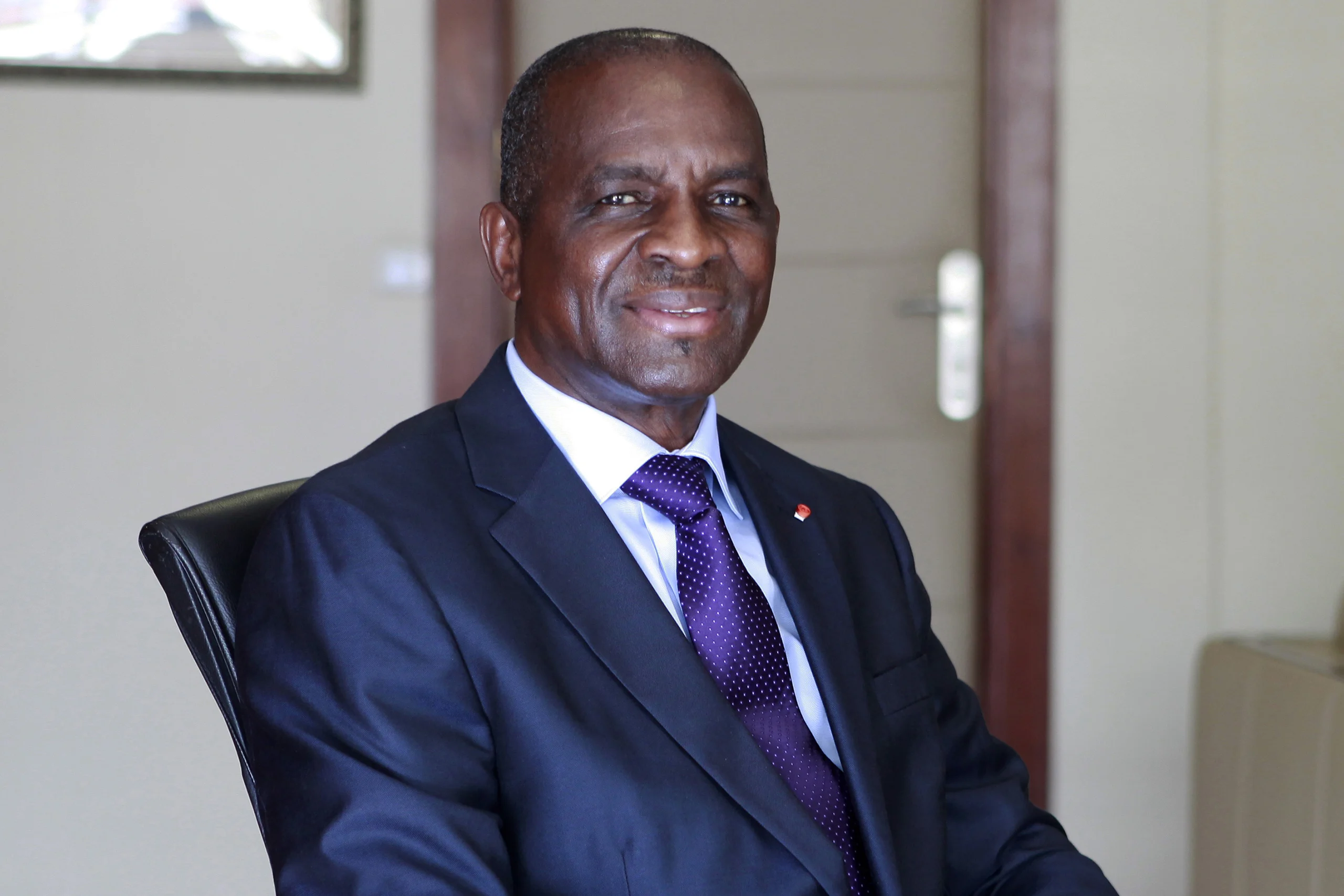
[ACCCI-CAVIE] The meteoric rise of Jean Kacou Diagou to the top of the NSIA Group is not the result of chance, but of a genuine African form of economic intelligence. Beyond technological systems, it is above all through a precise human network and an intuitive ability to decipher the intentions of market actors that the builder secured his decision-making. This mastery of HUMINT made it possible to transform every uncertainty in the African landscape into a real strategic and competitive lever.
Competitive intelligence as defined by the African Centre for competitive intelligence (ACCI-CAVIE) is “both a mindset, a system, and a process of questioning, collecting, processing and analyzing information useful for decision-making through rapid, legal and secure means when operating in a competitive, hostile or uncertain environment,” has established itself as the silent engine behind the meteoric rise of Jean Kacou Diagou. Through rigorous mastery of intelligence collection and analysis, the founder of NSIA turned a regulatory opportunity into a transcontinental empire, illustrating the power of strategic management in uncertain environments.
Competitive intelligence as the foundation of financial sovereignty
The history of the NSIA Group does not rest on chance but on an exceptional ability to turn legal information into a competitive advantage. Diagou, as initiator and drafter of the CIMA Code (Inter-African Conference on Insurance Markets), practiced a form of normative intelligence ahead of its time. By understanding the weaknesses of fragmented national legislations and anticipating the harmonization of the market, he identified a niche that Western multinationals had not yet invested in with sufficient agility.
This vision, rooted in a deep understanding of key actors and sector constraints, led to the birth of an Ivorian national champion that later became pan-African. By setting the initial capital at the minimum required by the new regulation, Diagou demonstrated strategic frugality, choosing to invest in human intelligence and territorial networks rather than immobilizing excessive financial resources.
NSIA’s expansion relied on constant monitoring of unmet needs. By segmenting his clientele between brokers (technical professionals) and the general public (requiring guidance), Diagou applied an intelligent segmentation strategy. This approach enabled him to capture local savings that had previously been neglected. Here, economic intelligence is not merely defensive, it is offensive. The objective: to structure a market where others see only scattered microfinance.
Bancassurance: the strategic fusion of intelligence and action
The year 2006 marked a major turning point with the shift to bancassurance. This is where the process of questioning and analysis described by CAVIE takes on its full meaning. Observing shrinking margins in the corporate segment, Diagou analyzed the financial ecosystem and concluded that proximity to individuals had to pass through the banking counter. The acquisition of BIAO, carried out in the utmost secrecy, stands as a textbook case of information security.
By acting before authorities or competitors could interfere, Diagou secured a struggling strategic asset and turned it around through an unprecedented synergy between insurance and banking. This maneuver created an ecosystem in which customer intelligence gathered by the insurer feeds banking services, and vice versa, thus optimizing capital profitability.
The expansion into Nigeria through the acquisition of ADIC during the Ivorian crisis demonstrates the psychological resilience typical of major economic intelligence strategists. Where the environment was deemed hostile by traditional investors, Diagou perceived the immense potential of the Anglophone market. This bold move, supported by rigorous analysis of economic cycles, enabled the group to overcome linguistic and regulatory barriers and establish itself as the sixth largest banking group in the WAEMU region.
The challenge of sustainability in the face of external shocks and global alliances
Jean Kacou Diagou’s fortune was consolidated through strategic alliances with funds such as ECP and Swiss Re. However, economic intelligence also requires monitoring one’s own partners. Tensions with the National Bank of Canada and Swiss Re illustrate that control of capital is the indispensable counterpart of sustainability. The dilution of shares and arbitration proceedings before the International Chamber of Commerce in Paris highlight the importance of protecting intangible assets and maintaining decision-making control.
The management of crises such as the collapse of SAF Cacao or bank card fraud cases reveals the limits of operational delegation. Jean Kacou Diagou’s return to the helm in late 2019 shows that authentic African economic intelligence remains, at the highest level, a matter of instinct and experience that technical tools cannot entirely replace.
The transfer of power to Janine Kacou Diagou represents the final stage of the economic intelligence process: the preservation of strategic knowledge. By integrating his daughter into the group as early as 1999 and confronting her with the most complex cases, Diagou ensured the continuity of a mindset. This “generational watch” guarantees that the NSIA Group will not lose its African identity in the face of global market pressures.
Ultimately, Jean Kacou Diagou’s success demonstrates that wealth in Africa is built at the intersection of a refined mastery of the legal framework, calculated boldness in acquisitions, and rigorous security of strategic intelligence. While governance challenges and exposure to sectoral risks remain, the NSIA model stands as a benchmark for the emergence of regional champions capable of transforming environmental uncertainty into a lever for growth. The group’s future will now depend on its ability to integrate new monitoring technologies to anticipate the shocks of tomorrow.
Dr. Guy Gweth