
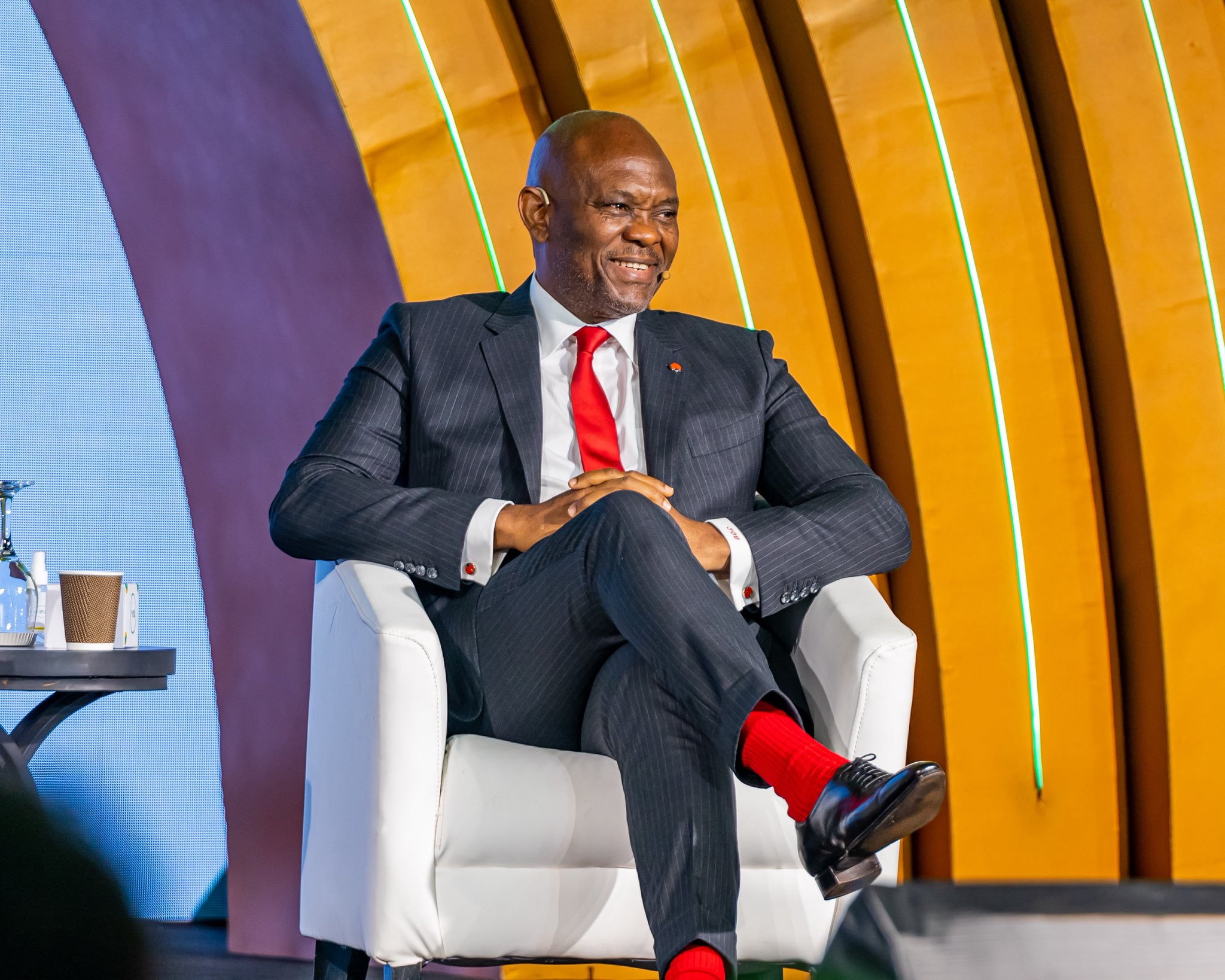
[ACCI-CAVIE] Tony Elumelu’s Africapitalism applies competitive intelligence as a tool of sovereignty, turning UBA and Heirs Holdings into pan-African platforms that capture strategic information, anticipate regulation, and drive inclusive growth. By linking banking, energy, entrepreneurship, and global influence, he shows how intelligence-driven private capital can build resilient wealth while advancing Africa’s long-term development.
In Africa, Tony Elumelu, Chairman of United Bank for Africa (UBA) and Heirs Holdings, embodies the sophistication of Competitive intelligence applied to services and global influence. Through his concept of Africapitalism, Elumelu has built an intelligence and influence apparatus that goes far beyond conventional banking management, becoming a key driver of continental transformation through strategic information. For while the African Center for Competitive intelligence and Strategic Monitoring (CAVIE) defines Competitive intelligence (CI) as a “state of mind,” in Elumelu’s case, that mindset becomes a weapon of Sovereignty and soft power.
Opportunity Intelligence: From Crystal Bank to the UBA Empire
Elumelu’s rise is a masterclass in the systematic collection and optimal exploitation of strategic information in uncertain environments. In 1997, when he took control of the modest Crystal Bank at the age of 33, he did not settle for a conventional financial turnaround. Instead, he conducted a surgical reading of the legislative shifts inherited from the Babangida era, identifying -ahead of his peers – the structural weaknesses of a banking system in transition.
Deregulation as an Intelligence Terrain
Competitive intelligence makes it possible to transform legally acquired information into a sustainable competitive advantage. Elumelu anticipated the waves of privatization and consolidation initiated in 2004 by Central Bank Governor Charles Soludo. By orchestrating the merger between Standard Trust Bank and the legacy UBA in 2005, he achieved what local experts described as the “first successful banking merger” in Nigeria.
This success was rooted in a tactical innovation derived from strategic intelligence on depositor psychology: persuading investors to convert debt into equity to stabilize the balance sheet. Under his leadership, UBA became the first Nigerian bank to surpass the one-trillion-naira threshold, the result of a precise analysis of market capitalization needs at a critical moment.
Pan-African Expansion: A Sovereign Intelligence Network
By transforming UBA from a domestic bank into a group operating in twenty African countries, as well as in London, Paris, and New York, Elumelu built an unprecedented system for capturing information flows. This network now provides the group with close-range intelligence on local economies, enabling secure economic decision-making in an increasingly competitive environment.
With more than 35 million customers, the institution is no longer merely a lender; it has become a real-time macroeconomic data sensor, offering its leader a panoramic view of the continent’s commercial dynamics.
Heirs Holdings and Africapitalism: A Holistic CI Process
For Elumelu, Competitive intelligence does not stop at the boundaries of the firm. It diffuses through a powerful ideological framework he methodically designed: Africapitalism. Now a registered concept, it seeks to redirect long-term capital toward sectors strategic to Africa – energy, healthcare, and agro-industry.
Influence Engineering and the Power Africa Lever
Elumelu’s most spectacular strategic move remains his alignment with President Barack Obama’s Power Africa initiative. By committing USD 2.5 billion through his holding company, he validated his doctrine at the highest level of global economic diplomacy.
The acquisition and turnaround of the Ughelli power plant – expanding capacity from 150 MW to 600 MW – demonstrate mastery of the value-creation process. By identifying an underperforming critical asset and injecting the necessary resources, Elumelu proved that private investment can resolve major social challenges while ensuring financial efficiency.
The Tony Elumelu Foundation: A Tool of Forward-Looking Intelligence
Through the Tony Elumelu Foundation (TEF), the billionaire initially invested USD 100 million to catalyze 10,000 entrepreneurs. From an African CI perspective, this program functions as an extraordinary trend-detection mechanism. By creating a digital ecosystem of one million Africans, Elumelu has built a unique database on youth entrepreneurship.
This is a strategy of prospective intelligence that gives Heirs Holdings a head start in tomorrow’s markets. It is no longer traditional philanthropy, but the deliberate formation of a new generation of private-sector leaders capable of carrying the doctrine of shared prosperity.
Diversification as a Response to Hostile Uncertainty
Elumelu’s trajectory also reveals exceptional resilience in the face of hostile regulatory constraints. When a Central Bank reform forced him to leave the helm of UBA in 2010 after ten years, he transformed this setback into opportunity. He founded Heirs Holdings and expanded Transcorp, investing heavily in agro-industry (fruit juice, fertilizers) and oil.
In 2021, through Heirs Energies, he acquired exploration licenses from Shell and Total, recently doubling production to 50,000 barrels per day. This diversification reflects the strategic logic of a well-informed investor who understands that the stability of an empire rests on control over energy and food resources.
Ultimately, Tony Elumelu’s trajectory – now commanding a fortune exceeding USD 1.4 billion – demonstrates that authentic African Competitive intelligence must be inclusive to be sustainable. Inspired by the meticulous discipline of Michael Jackson and the long-term vision of Warren Buffett, his model rests on a simple conviction: no one will develop Africa in place of Africans.
Africapitalism thus emerges as the response of a private sector fully aware that its own longevity depends on the well-being of its environment. Elumelu’s next challenge is to turn this model into a systemic industrial revolution capable of withstanding inflationary shocks and monetary instability that continue to threaten the continent’s growth.
Guy Gweth